Find the bad IT days before the tickets do
Most IT problems announce themselves. A disk fills, a service dies, an alert fires. Experience problems don't. The laptop that takes four minutes to boot, the machine that stutters through every video call, the workstation pinned at full memory since the last software rollout — none of these trip a threshold. The employee adapts, loses twenty minutes a day, and eventually files a ticket that reads "my computer is slow" with no context attached. Monitic's digital employee experience software measures what people actually experience on their devices — from real telemetry, per device, continuously — so IT sees the degradation weeks before the complaint.
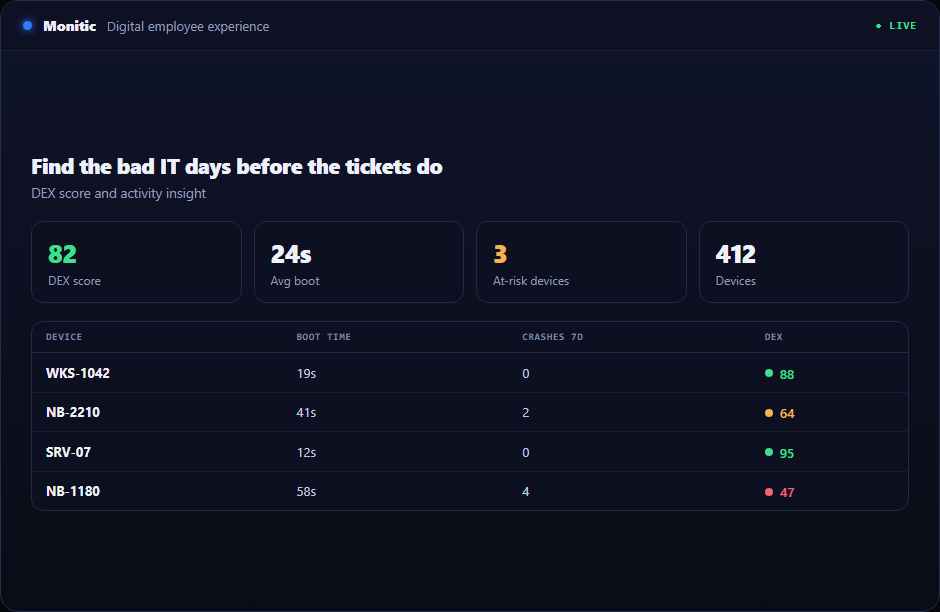
Digital employee experience software starts with a score
Every managed device gets a composite experience score, computed from real telemetry the Monitic agent already collects — not from surveys, not from synthetic tests run against a lab machine nobody uses. One number makes experience comparable: you can rank the fleet, watch a device's trend, and see whether last month's changes made things better or worse. When a score drops, the signals behind it are right there to explain why. The DEX score page covers how the number is built and what to do with it.
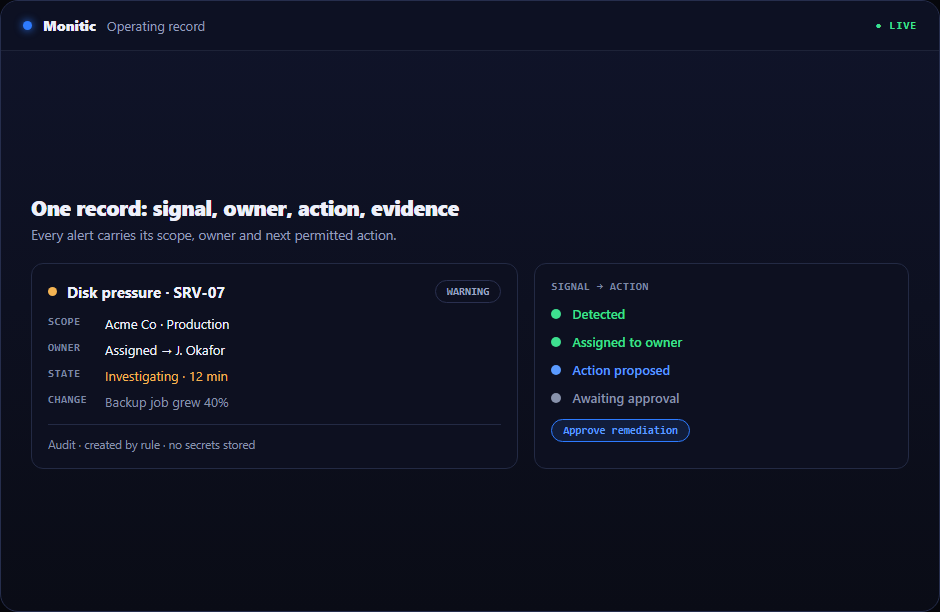
The signals behind the number
A score is only as honest as its inputs. Monitic draws on two families of telemetry. Activity tracking captures how a device is actually used — foreground application usage and active/idle time patterns — so the platform knows the difference between a machine struggling during someone's working hours and one idling overnight. Device performance signals capture how the machine responds: boot and application responsiveness, and resource pressure under real workloads. Together they describe the experience as the employee lives it. See activity tracking for the usage side, including how it is framed for privacy.
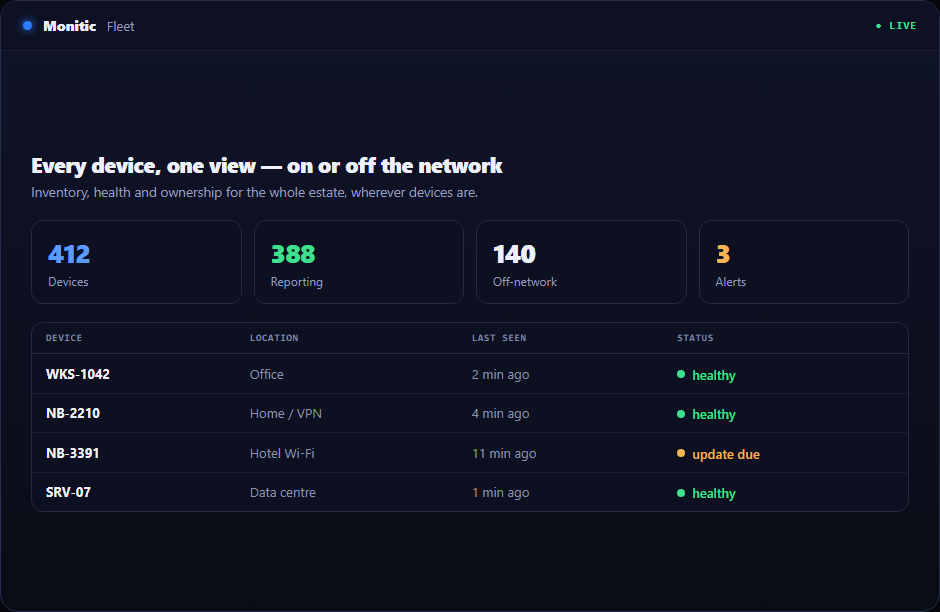
From one bad laptop to a fleet decision
Individual scores answer "who needs help today." DEX reports answer the executive questions: is experience trending up or down across the fleet, which groups are suffering, and which specific devices are the worst offenders. That worst-offender list is where budget conversations get easy — instead of refreshing hardware on a calendar, you refresh the machines that are measurably making people miserable, and you can show the before-and-after. Details on DEX reports.
Explore digital employee experience in depth
- DEX score — the composite per-device score, computed from real telemetry.
- Activity tracking — foreground app usage and active/idle patterns, privacy-aware by design.
- DEX reports — fleet-level trends and worst-offender identification.
Part of one platform
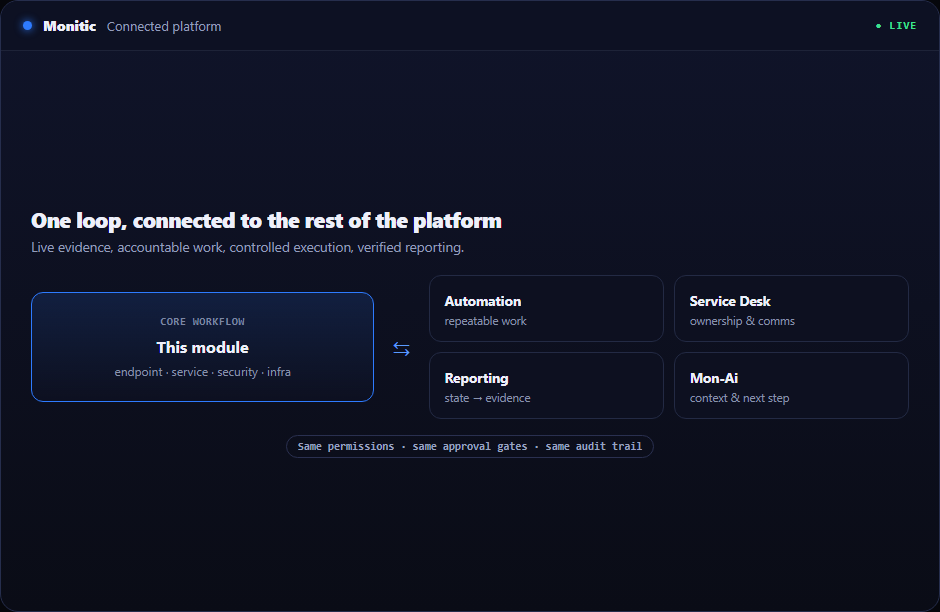
DEX runs on the same agent and console as everything else in Monitic. The telemetry comes from endpoint management, so there is no second collector to deploy. Experience scores give your service desk the context behind "it's slow" tickets — and help close them before they are opened. Fleet trends feed reporting and analytics for the numbers leadership sees. For distributed teams where IT rarely touches the hardware in person, DEX is the visibility layer described in the hybrid workforce solution. It's part of per-endpoint platform plans — see pricing — and setup is covered in the DEX documentation.
Frequently asked questions
What is a digital employee experience score?
A composite number per device, computed from real telemetry: device performance signals such as boot and application responsiveness and resource pressure, combined with activity patterns showing how the device is actually used. It makes experience measurable and comparable across the fleet.
Is this employee surveillance?
No. DEX measures the device, not the person. Activity tracking records foreground application usage and active/idle time patterns — the context needed to judge whether hardware serves its user — not keystrokes, messages, or screen content. Access sits behind the platform's roles and permissions like everything else.
How does DEX reduce ticket volume?
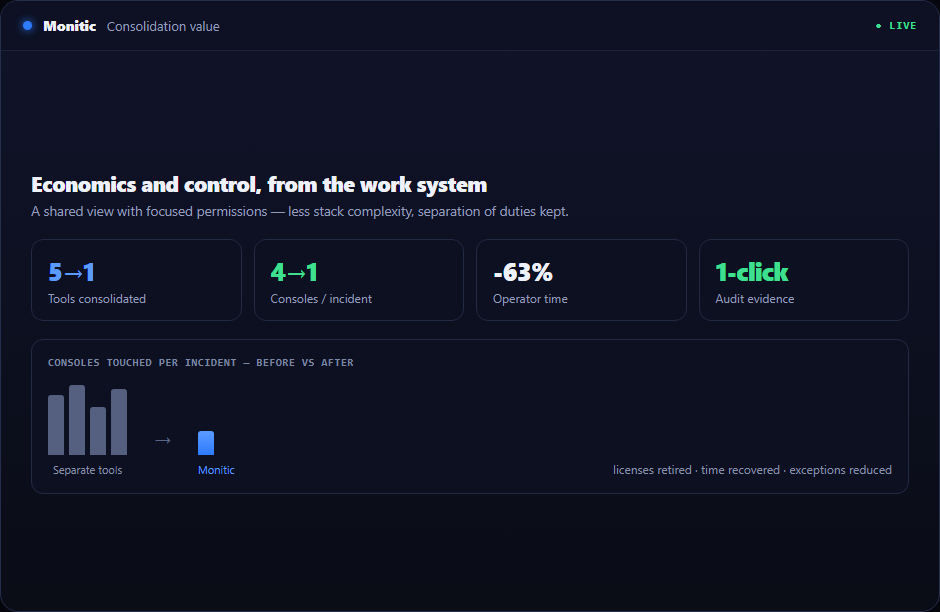
By inverting the flow. Instead of waiting for "my computer is slow" tickets that arrive weeks after the degradation started, IT sees falling scores and worst-offender lists and fixes or replaces the machines proactively.
Do we need to deploy anything extra?
No. DEX uses telemetry from the same Monitic agent that handles monitoring, patching, and automation — one agent, one console.
See Monitic on your own fleet
Full-featured 14-day trial · no credit card · your real fleet in the console on day one.