Device activity insights without the surveillance
Performance data without usage context is half a picture. A server pinned at full memory is a problem; a workstation pinned at full memory while nobody is using it may not be. Monitic's activity tracking supplies the missing half: foreground application usage and active/idle time patterns, collected per device by the same agent that gathers everything else. The purpose is precise — understand how devices are used so experience and capacity decisions rest on evidence — and the scope is deliberately narrow. This is device activity insight, not employee surveillance, and the distinction is built into what the feature collects.
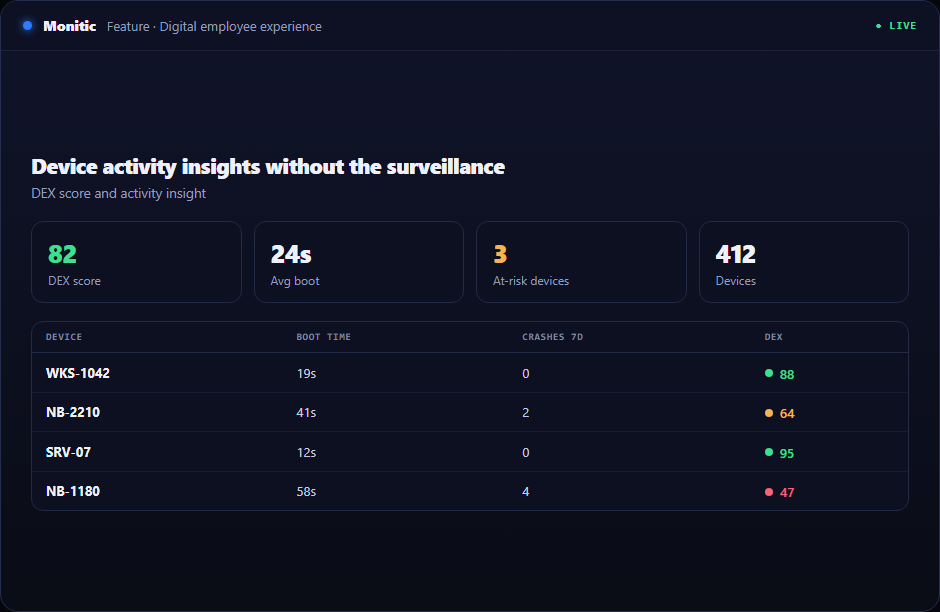
Foreground usage and active/idle patterns
For each device, Monitic records which application holds the foreground and when the device is actively used versus idle. Over days and weeks those data points become a usage profile: this machine spends its active hours in the ERP client and a browser; that one is active four hours a day; a third runs hot overnight but sits idle when its user arrives. The profile is what turns raw performance telemetry into an experience judgment — resource pressure during active hours is a person losing time, while the same pressure at 3 a.m. is just a scheduled job doing its work.
Experience and capacity, not keystrokes
The framing matters, and so does the data model. Activity tracking captures application-level usage and activity timing — not keystrokes, not message content, not screenshots. What that enables is the analysis IT actually needs: matching hardware to workload, so the analyst running heavy tools gets the capable machine and the lightly-used laptop is redeployed instead of replaced; spotting devices whose usage has outgrown their spec before the complaints start; and separating "the device is slow" from "the device is busy." Access to activity data sits behind the platform's roles and permissions like every other dataset, so who can see it is a deliberate decision, not a default.
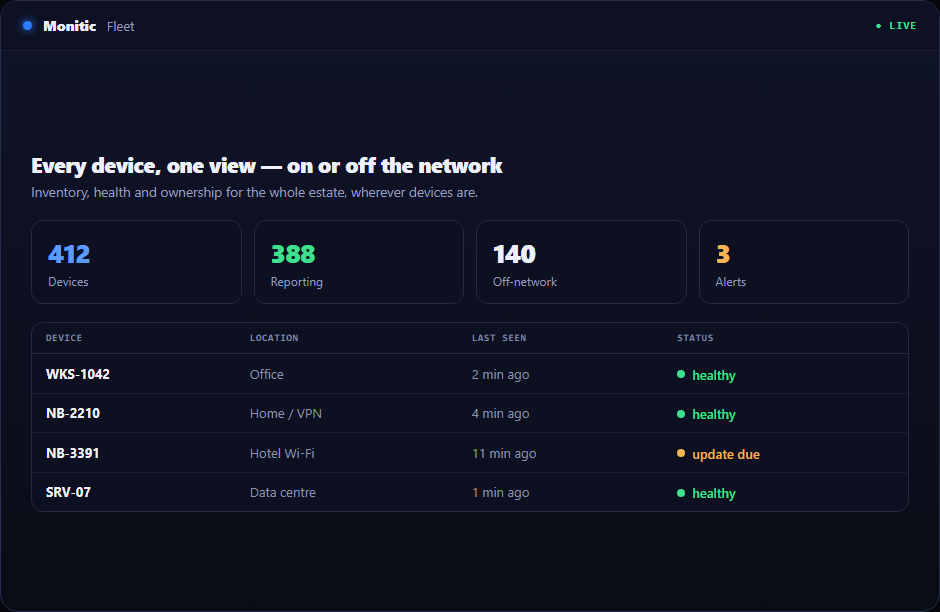
The context behind the experience score
Activity data is a first-class input to the DEX score. It weights performance signals by when they matter, and it explains score movements that pure performance data cannot — a score that drops as a device's active workload doubles tells a different story than one that drops on an unchanged workload. At fleet level, the same patterns feed DEX reports, where usage context helps separate the devices that need a fix from the ones that need a replacement.
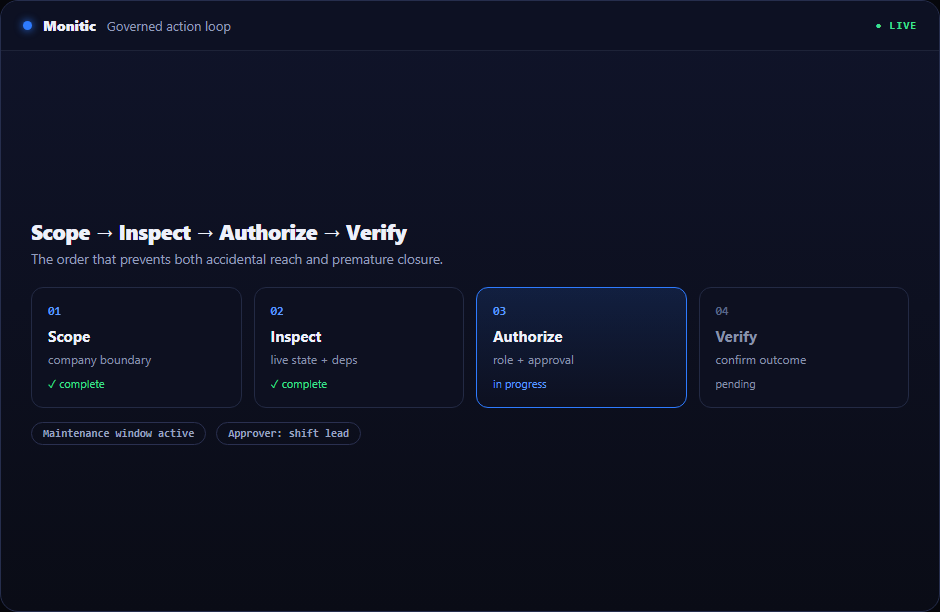
Works with
- DEX score — activity patterns give the composite score its usage context.
- DEX reports — fleet-level trends built on the same usage data.
- Asset inventory — pair usage profiles with hardware and software inventory for redeployment and refresh decisions.
Frequently asked questions
Is activity tracking employee monitoring?
No. It measures device usage — foreground application and active/idle timing — to judge whether hardware serves its user. It does not capture keystrokes, message content, or screen contents, and it is framed and used as an experience and capacity tool.
What exactly is collected?
Foreground application usage and active/idle time patterns, per device, collected by the standard Monitic agent alongside its other telemetry.
Who can see activity data?
Only users your roles allow. Activity data sits behind the platform's RBAC like every other dataset, so visibility is scoped deliberately — by team, company, or role.
What decisions does this data actually improve?
Hardware refresh targeting, workload-to-spec matching, redeployment of underused machines, and honest interpretation of experience scores — pressure during active use is a problem; pressure while idle usually is not.
See Monitic on your own fleet
Full-featured 14-day trial · no credit card · your real fleet in the console on day one.