Automated, CVE-driven patch management
Patching is where security posture and operations budget collide. Most patch management software treats every update as equally urgent, so teams either patch everything — and burn cycles on updates that carry no risk — or fall behind everywhere at once. Monitic starts from risk: it syncs the NVD CVE database, matches known vulnerabilities against the software actually installed on your fleet, prioritizes what's exposed, and then deploys the fix through the same agent that found it. Detection to remediation, one console, with per-endpoint plans — see pricing.
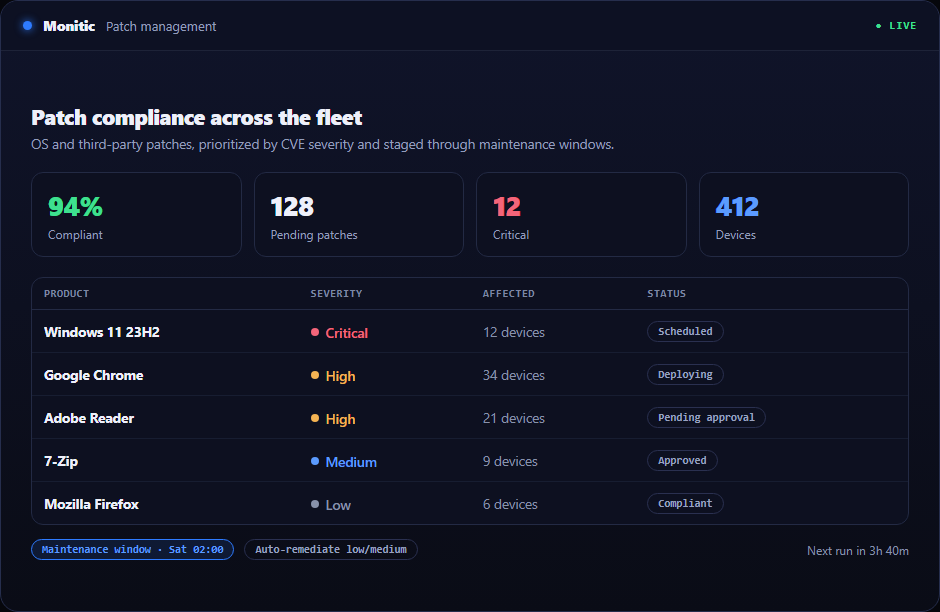
CVE-driven prioritization: patch what's exploitable first
Monitic continuously syncs CVE data from the NVD and matches it against your installed software inventory. Instead of a flat list of available updates, your team sees which endpoints run software with known vulnerabilities — and patches those first. Prioritization stops being a spreadsheet exercise and becomes a property of the platform. For deeper scanning and remediation workflows, this connects directly to vulnerability management.
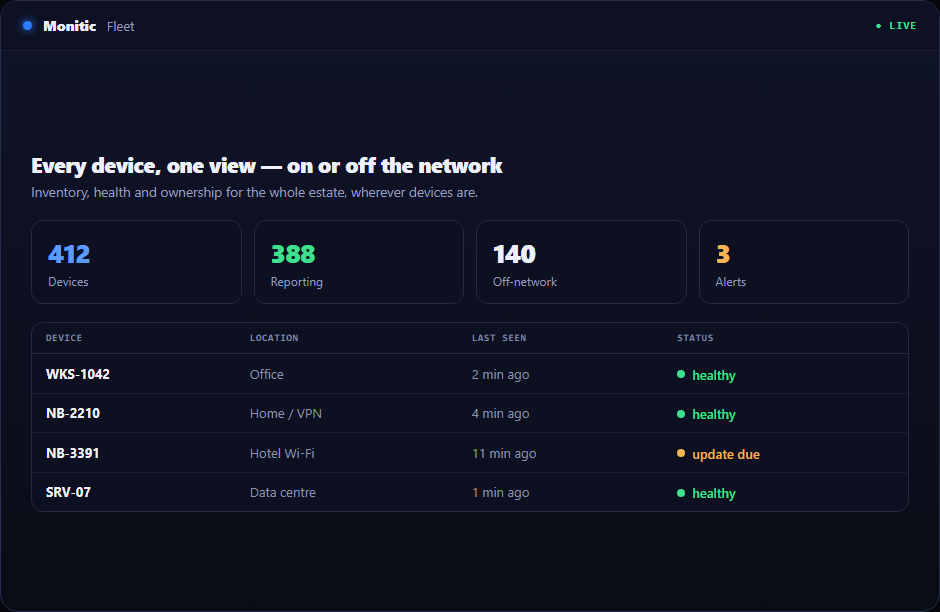
Windows Update and WSUS, from one console
Monitic manages Windows Update across the fleet and integrates with WSUS where you already run it, so existing infrastructure keeps its value while gaining central visibility and control. Approvals, deployment, and status all live in one place instead of three consoles and a shared spreadsheet. Explore Windows patch management in depth.
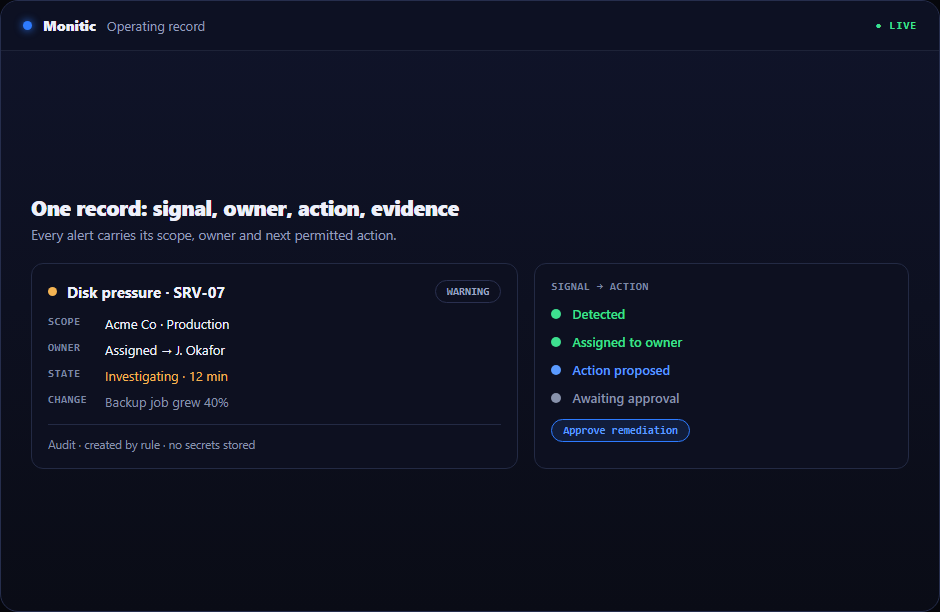
Third-party applications, same engine
The applications running on top of the OS are patched through the same pipeline: same agent, same scheduling, same reporting. No separate third-party patching product, no second deployment mechanism to certify and maintain. See third-party patching for how application updates ride alongside OS updates.
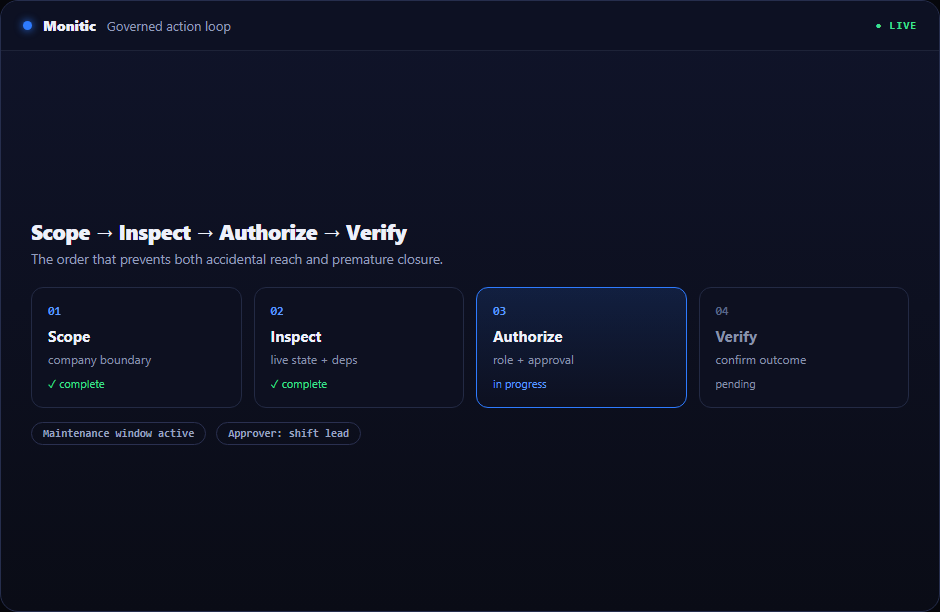
Deployment you can watch, not wonder about
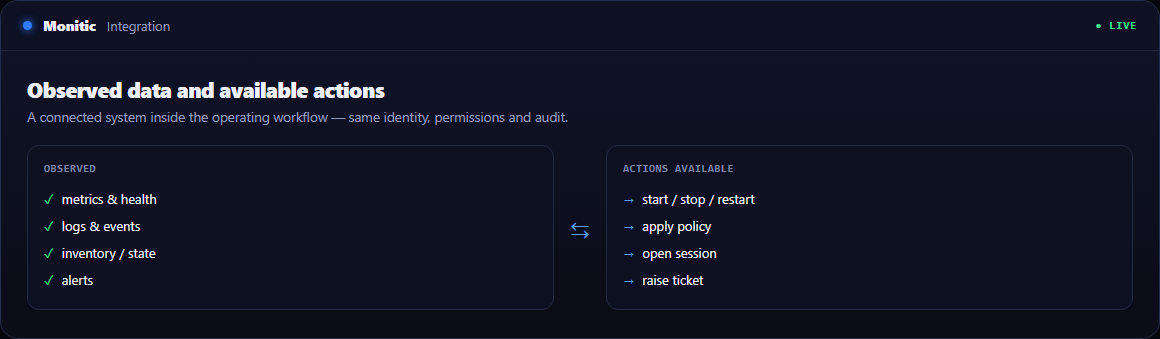
Patches deploy as agent tasks with live progress tracking — you see each endpoint move through download, install, and completion in real time rather than waiting for a next-day summary. Runs can be scheduled and fully automated through the automation engine, so routine patching happens on your calendar without a human clicking through it.
Reporting your auditors will accept
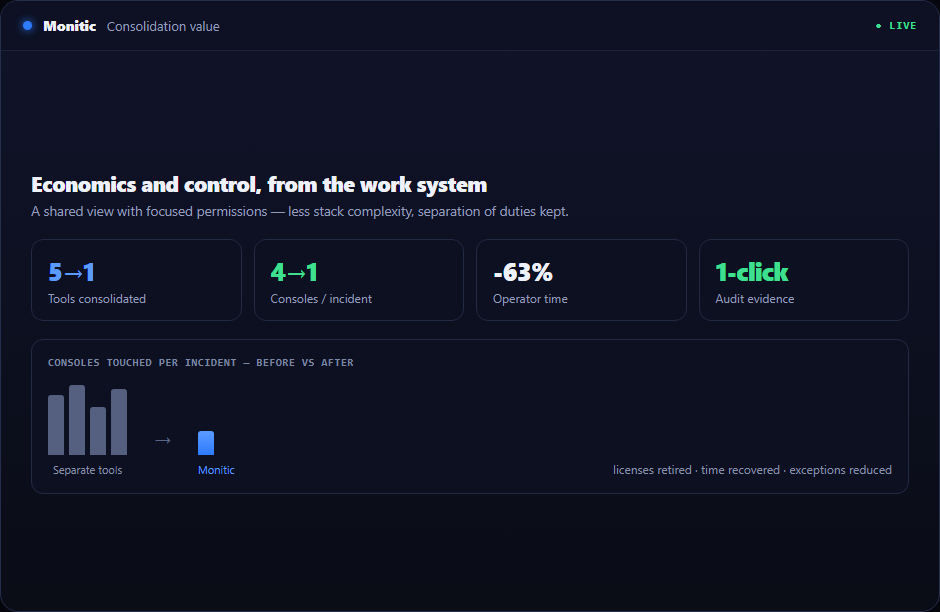
Fleet-wide patch status reporting shows exactly which endpoints are current, which are pending, and which failed — and compliance-style patch reports turn that into evidence you can hand to an auditor or a board. Paired with security compliance, patching becomes something you prove, not something you assert. Teams facing framework obligations should see how Monitic supports compliance programs.
Explore patch management in depth
- Windows patch management — Windows Update and WSUS, centrally controlled
- Third-party patching — application updates through the same engine
Works with the rest of the platform
- Vulnerability management — find and prioritize what patching should fix
- Security compliance — enforce and evidence your patch posture
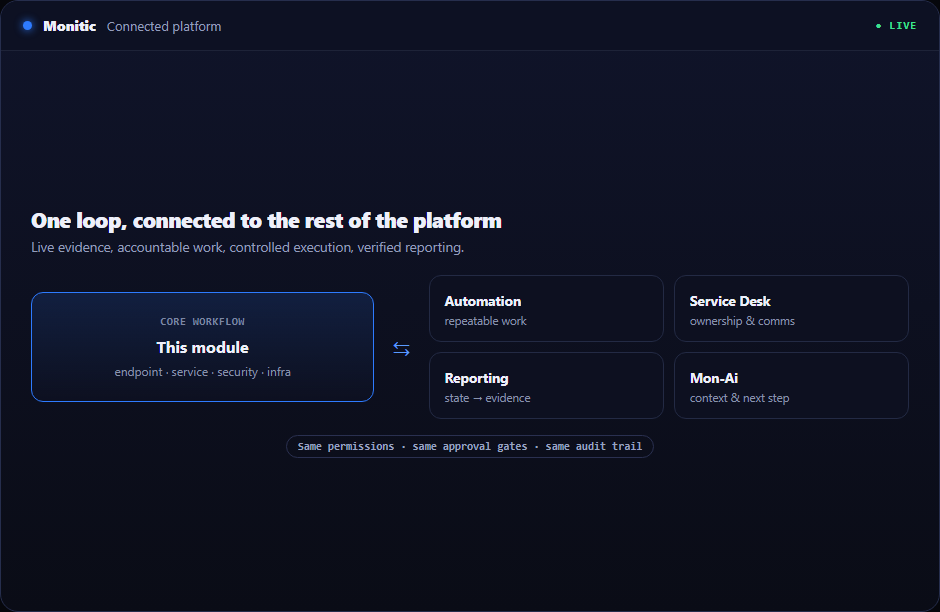
- Automation — schedule and orchestrate patch runs fleet-wide
Frequently asked questions
How does CVE-driven prioritization work?
Monitic syncs the NVD CVE database and matches it against the software inventory collected from every endpoint. Updates that close known vulnerabilities on your actual fleet surface first, so effort follows risk instead of release dates.
Does Monitic replace or integrate with WSUS?
It integrates. If WSUS is part of your environment, Monitic manages it from the same console as everything else; if not, Monitic manages Windows Update directly through the agent.
Can patch runs be fully automated?
Yes. Scheduled, automated patch runs execute through the automation engine, with live progress tracking on every deployment and full status reporting afterward.
What does patch reporting cover?
Fleet-wide patch status — current, pending, and failed — plus compliance-style reports suitable for audit evidence. Setup details live in the patch management docs.
See Monitic on your own fleet
Full-featured 14-day trial · no credit card · your real fleet in the console on day one.