CVE scanning without the scanner
A traditional CVE scanning tool interrogates your endpoints from the outside: schedule a scan, manage credentials, wait for the window, hope nothing was asleep or off-network. Monitic inverts the model. The agent already maintains a live inventory of every installed package and version — so CVE detection becomes a matching problem, not a scanning problem. Sync the NVD, match it against what is actually installed, and every affected endpoint is identified the moment the data lands.
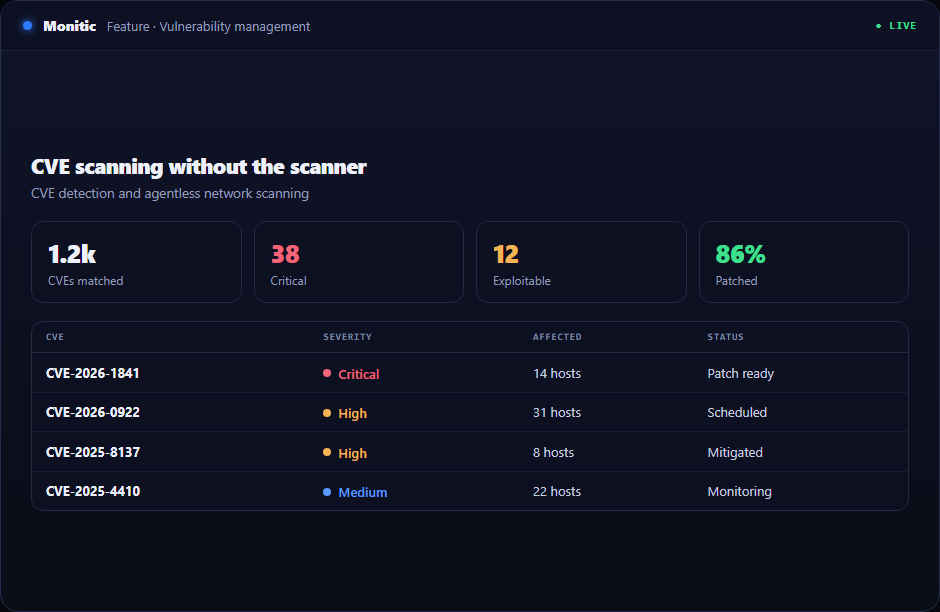
NVD sync, matched against what is actually installed
Monitic keeps CVE data current through NVD synchronization and evaluates it against the live software inventory each agent reports. The match is grounded in ground truth: the exact packages and versions on each machine right now — not last quarter's asset export, not a fingerprint guessed from a port scan.
- Continuous NVD sync keeps the vulnerability data fresh
- Matching against live inventory — versions as installed, per endpoint
- New CVE published means affected machines identified, without waiting for a scan cycle
For a CISO, the practical difference is exposure-window math: detection latency is bounded by data sync, not by how often you can afford to run a fleet-wide scan.
No scanner appliance for endpoint CVEs
Because detection rides on the inventory the agent already maintains, there is nothing extra to deploy for endpoint CVE coverage — no appliance, no scan schedule, no credentialed-scan plumbing, no network load from interrogating thousands of machines.
- Zero additional infrastructure for endpoint CVE detection
- Remote and travelling machines covered wherever the agent reports from
- No scan-time blind spots for devices that were off during the window
For network devices and other assets that cannot run an agent, the platform pairs this with network vulnerability scanning through Greenbone — endpoint and network coverage under one console.
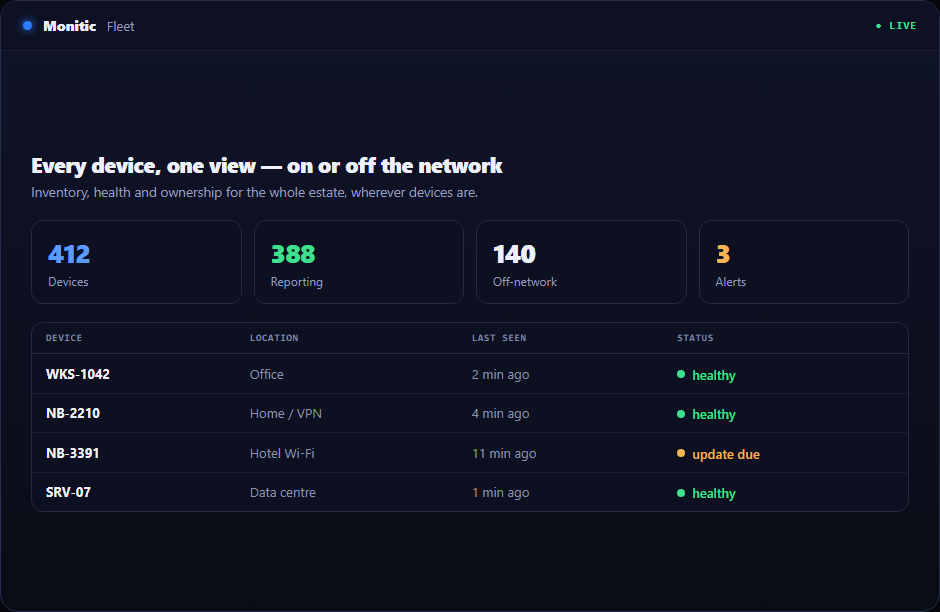
Findings that route straight into the fix
A matched CVE in Monitic is not a report line; it is a work item on an actuation platform. Patchable findings flow into patch management and deploy through the same agent that surfaced them. Others route into remediation workflows as scripted fixes. When the inventory updates, the finding clears — closure you can demonstrate, not assume.
- One click from CVE finding to patch deployment
- Scripted remediation for findings without a vendor patch
- Automatic verification as the live inventory reflects the fix
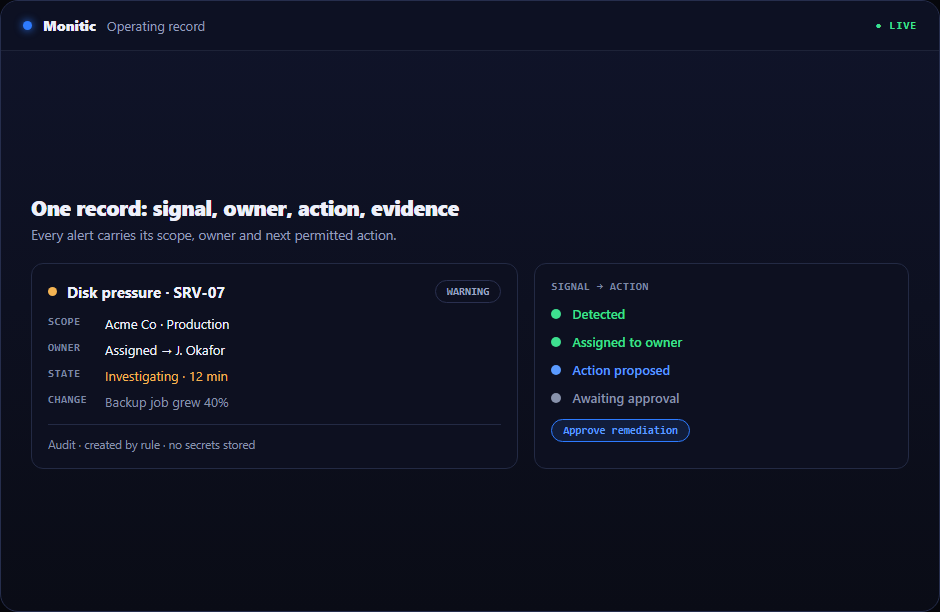
Works with
CVE detection is the endpoint pillar of vulnerability management. It works alongside network vulnerability scanning for agentless assets and remediation workflows for closure — with patch management as the remediation engine for everything patchable.
Frequently asked questions
Where does the vulnerability data come from?
From the National Vulnerability Database (NVD), synchronized continuously and matched against each endpoint's live software inventory.
Do I need to schedule scans?
Not for endpoints. Detection follows the inventory: as agents report installed software and NVD data syncs, matches surface automatically. There is no scan window to plan and no appliance to run.
What about devices that cannot run an agent?
Those are covered by network vulnerability scanning through the Greenbone integration, with findings delivered into the same console as endpoint CVEs.
See Monitic on your own fleet
Full-featured 14-day trial · no credit card · your real fleet in the console on day one.