Extend vulnerability visibility beyond agent-managed endpoints
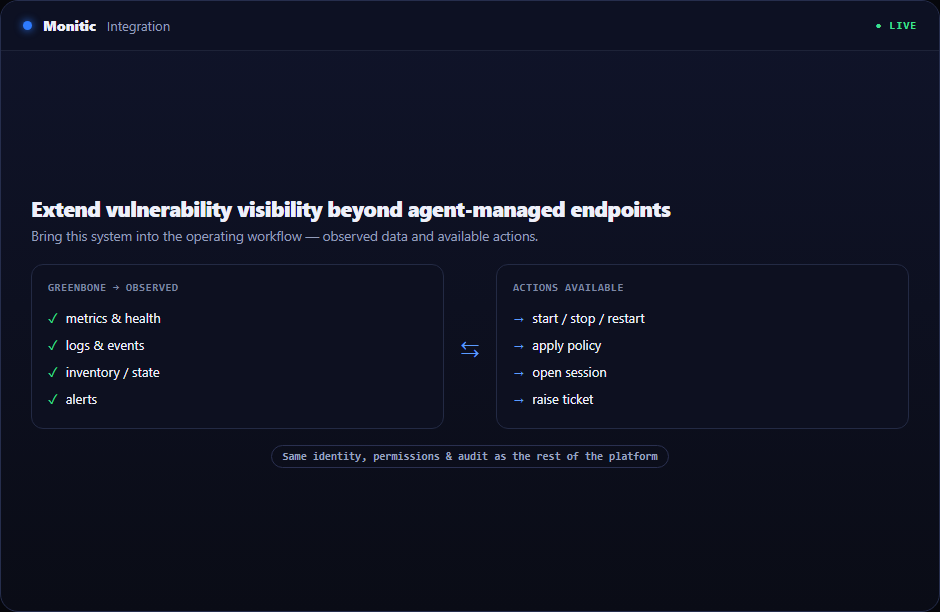
Greenbone and OpenVAS scan infrastructure and devices that cannot run an endpoint agent. Monitic normalizes those findings beside inventory-based CVEs.
Operational maturity depends less on having another dashboard than on shortening the distance between evidence and action. Monitic embeds greenbone integration into the control plane used for endpoint, service, security, and infrastructure work.
Why this workflow matters
A dashboard is not an operating model. Without ownership, an approved response path, and retained outcome, the team has only moved the observation. Monitic designs greenbone integration around completing the work rather than displaying another list.
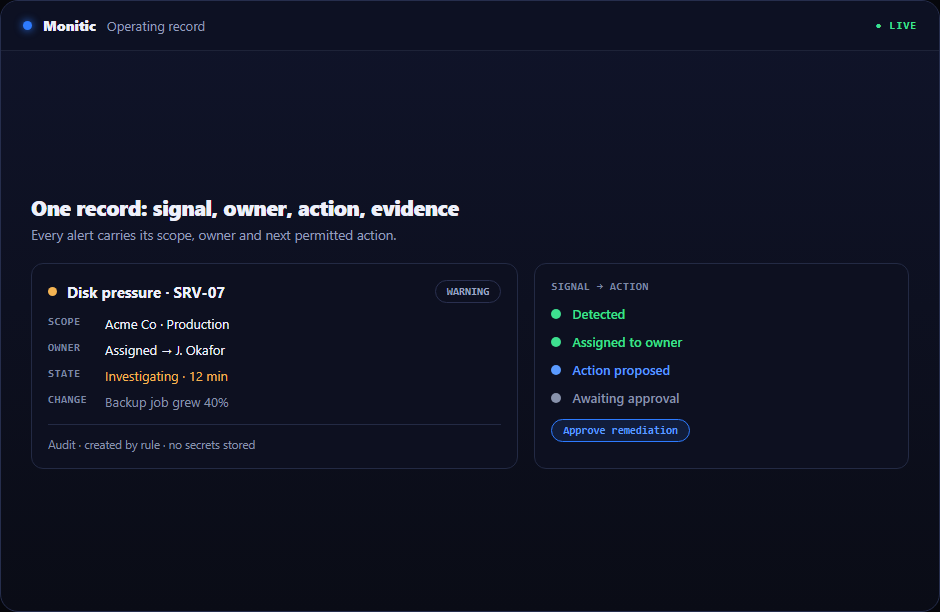
The result is traceable movement from fleet-level signal to one responsible resource. An executive can see the aggregate, an operator can drill into the cause, and an auditor can identify the person and outcome without rebuilding the chain from several exports.
What greenbone integration looks like in Monitic
Connect through the Greenbone API. The presentation emphasizes state, scope, ownership, and exception so an operator can decide whether greenbone integration requires action now.
Unify network and endpoint vulnerability findings. The operator works from the same record used by monitoring and reporting, so targeting does not depend on a separately maintained hostname list or spreadsheet.
Preserve device context and remediation ownership. Approval gates can protect high-impact work, and the audit trail retains stable identifiers instead of sensitive payloads or informal notes.
Evaluation checkpoints for greenbone integration
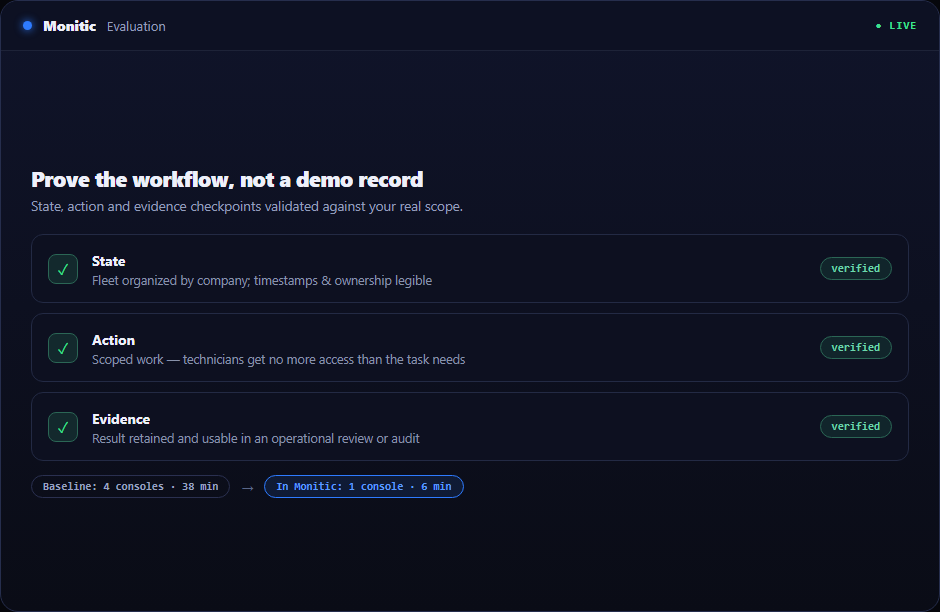
A useful evaluation should prove the workflow against real scope rather than a polished demo record. Use the following checkpoints when validating greenbone integration:
- State: Verify that the platform can connect through the Greenbone API and that timestamps, company ownership, and exceptions are understandable to an operator who did not configure the feature.
- Action: Confirm that authorized technicians can unify network and endpoint vulnerability findings without receiving broader access than the task requires.
- Evidence: Check that Monitic can preserve device context and remediation ownership and that the result is useful in an operational review, customer conversation, or audit.
Record the baseline time, number of consoles touched, and evidence available before Monitic. Repeat the same scenario in the trial. The comparison should show whether greenbone integration reduces handoffs as well as completing the technical task.
From evidence to verified action
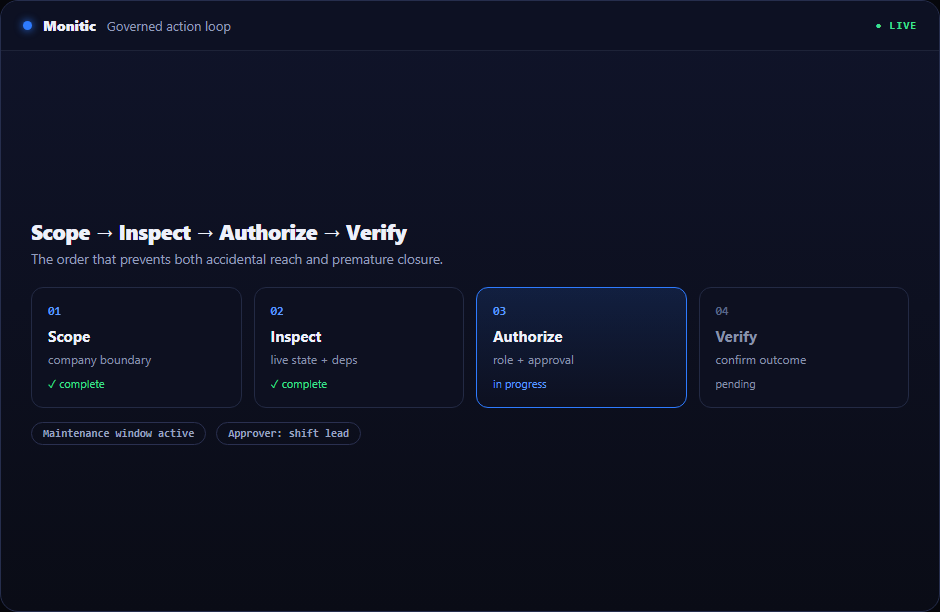
- Scope before search. Establish the customer or business boundary and intended outcome.
- Inspect before change. Review live state, recent activity, and dependencies.
- Authorize before execution. Apply the role, approval, or maintenance rule appropriate to impact.
- Measure after execution. Confirm the technical result and its operational effect.
That order reduces both accidental reach and premature closure.
Business value beyond the feature
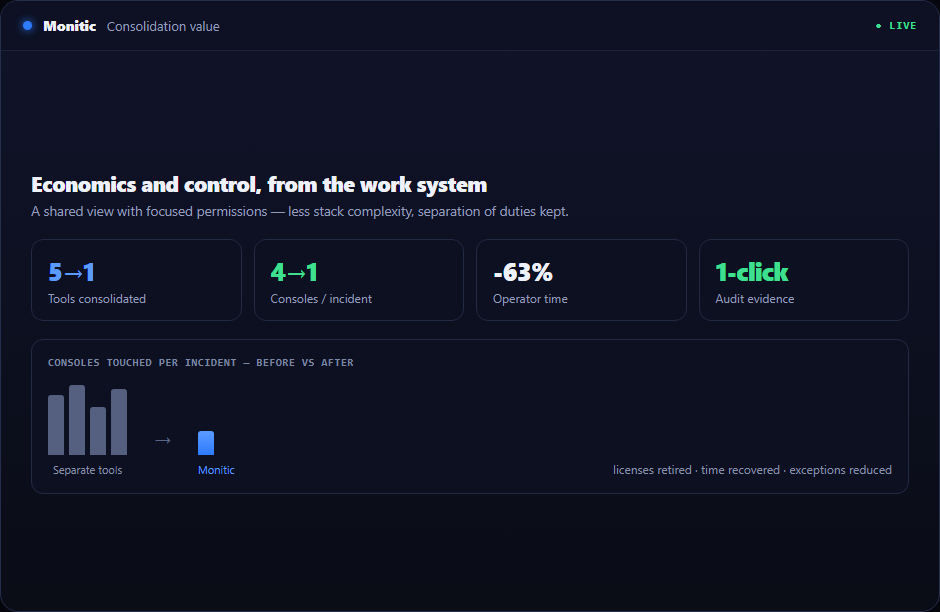
Tool consolidation should not trade several narrow controls for one unrestricted super-console. Greenbone Integration combines a shared view with focused permissions, so teams can reduce stack complexity while retaining separation of duties.
Leaders can evaluate both economics and control: licenses retired, operator time recovered, exceptions reduced, and evidence generated directly from the work system.
Connected to the rest of the platform
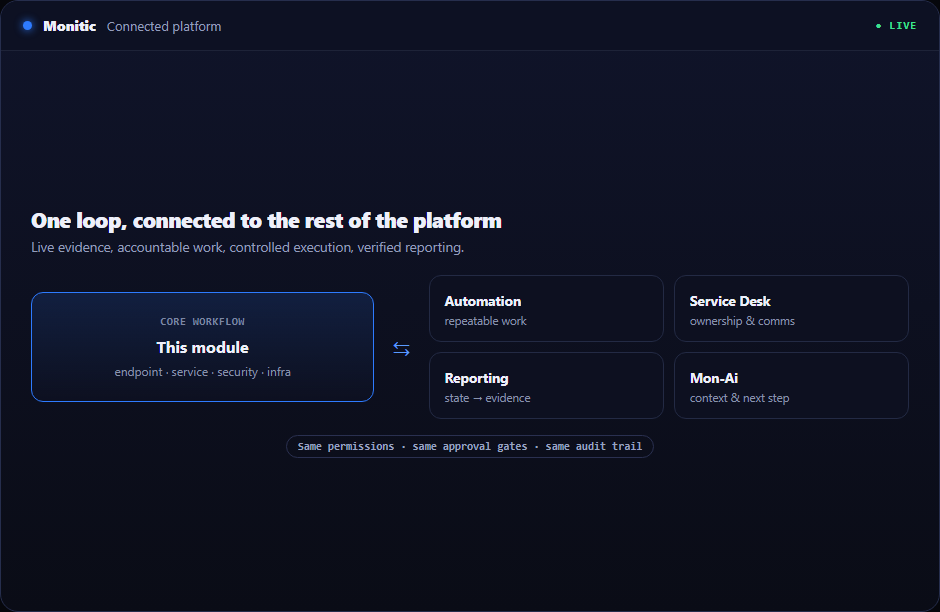
The strongest outcome comes from the loop around greenbone integration: live evidence, accountable work, controlled execution, and verified reporting. Automation and AI accelerate that loop only through the permissions already granted to the directing operator.
Frequently asked questions
Is greenbone integration suitable for MSP operations?
Yes. Root tenant ownership and company isolation let an MSP standardize the workflow across customers without mixing their resources or technician access.
Must technicians receive vendor or platform administrator credentials?
No. Focused Monitic permissions expose the required workflow while avoiding broad shared administration wherever the integration and action model permit.
Can reports use the same live data?
Yes. Reporting reads the operational records behind the workflow, reducing dependence on screenshots and manually refreshed spreadsheets.
Can we test greenbone integration before rollout?
Yes. Use a scoped company, device group, or integration in the 14-day trial and compare current state, action outcome, and audit evidence with your acceptance criteria.
See Monitic on your own fleet
Full-featured 14-day trial · no credit card · your real fleet in the console on day one.